
What makes Penwell different
Occupancy is the variable. In town, a rodent problem gets noticed in days because someone is living in the building. Out here it gets noticed in months, and by then it isn't a rodent problem, it's a cleanup and repair problem.
Disturbance is what normally keeps rodents cautious. Remove it and they use the whole structure — countertops, cabinets, drawers, wall cavities, and the middle of a room in daylight — instead of hugging the edges at night.
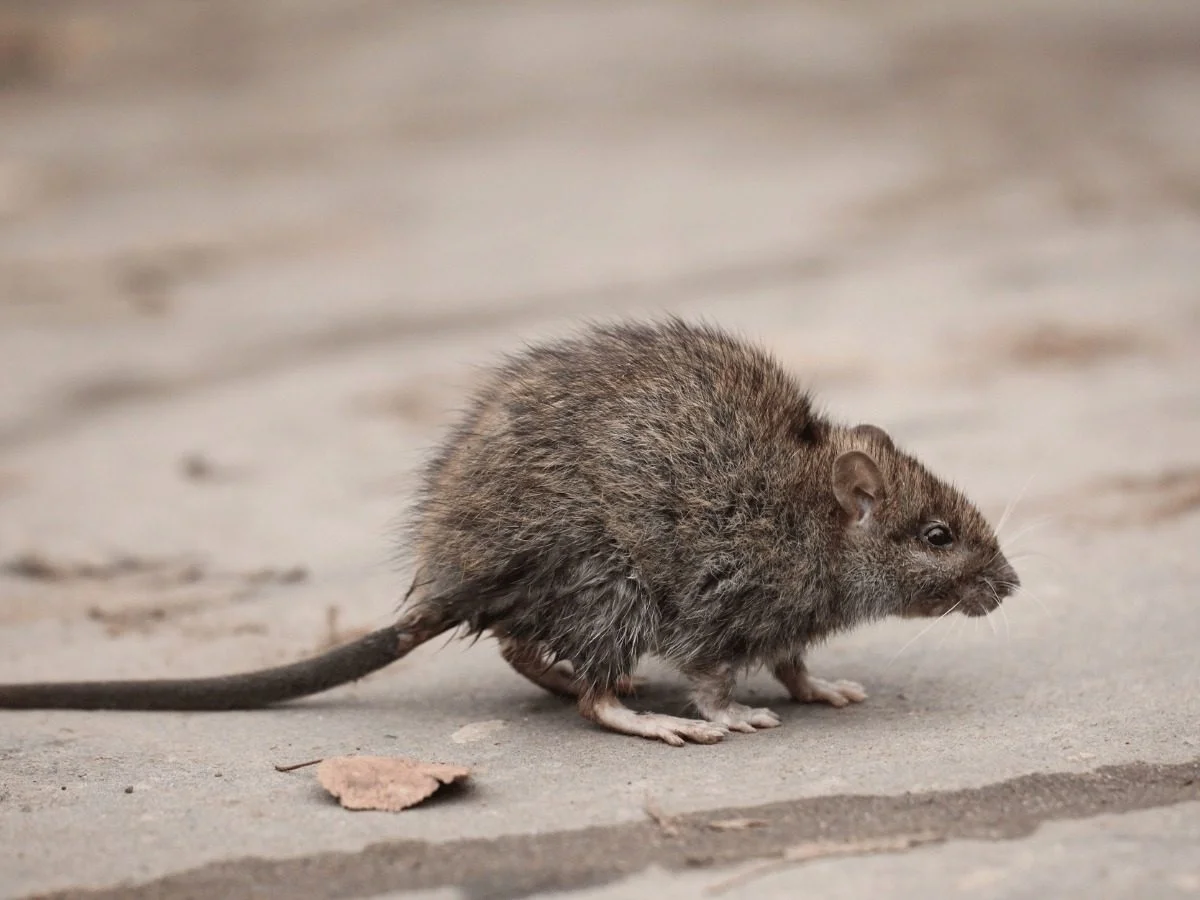
I-20 corridor traffic and oilfield operations bring trash, food waste, and stored material into an otherwise thin landscape, which supports Norway rats where those things concentrate.
Open country in every direction. Not much natural cover, which makes every structure disproportionately attractive. More on that dynamic »
Grassland and desert species are in play — cotton rats, pack rats, and deer mice — more than in central Odessa.
Distance is real. Penwell is a drive from Odessa, and we'd rather be straight about scheduling than promise a window we can't hit. Call for details on scheduling and service area coverage.
The empty-building timeline
This is what actually happens in a structure nobody visits. It's the most useful thing on this page because it explains why the discovery is always so much worse than expected.
Week one. Something finds a way in. Usually at ground level — a door threshold, a gap under a roll-up, a conduit or pipe penetration, a corrugated wall rib at the slab.
Weeks two to four. Nesting begins. With no disturbance, they use insulation, paper, cardboard, upholstery, and stored soft goods. Droppings accumulate along runways and in cabinets and drawers.
Month two. Breeding. House mice reach maturity in about five to six weeks with a gestation of roughly three weeks, so a small problem does not stay small in an unoccupied building — it compounds.
Months two to four. Chewing gets consequential. Wiring, insulation, control and low-voltage runs, plastic lines, and anything stored. The urine and dropping load builds throughout, which is the part that turns this into a decontamination job.
Whenever someone finally opens the door. Odor, visible contamination, damaged stored material, and sometimes equipment that no longer works. None of it happened suddenly.
The lesson isn't complicated: on an intermittently used structure, scheduled checks beat emergency response by an enormous margin, and the check itself takes minutes.
The first five minutes when you open it up
If you're the person unlocking a building that's been closed for weeks, do this before anything else.
- Open it and let it air out. Doors and windows if it has them. Don't start moving things around in a closed room.
- Look before you touch. Droppings along walls, in cabinets and drawers, on shelves, in stored material, and on top of anything horizontal.
- Look up. Ceiling stains, insulation pulled down, nesting material in a light fixture or a vent.
- Check anything with a motor or a board — HVAC, pumps, panels, appliances, equipment — before energizing it. Rodents in vehicles & equipment »
- ⚠ Do not dry-sweep and do not shop-vacuum anything. This is the rule that matters most and it matters most in exactly this situation: an enclosed building, a heavy accumulation, and deer mice more likely than in town. Ventilate, wet everything down with a disinfectant solution, gloves and a proper mask on, and bag it wet. Cleanup method » · Health risks » (general safety information, not medical advice)
- Photograph it, dated, before you clean. If there's an insurance claim, a lease question, or an operator conversation coming, that record is worth having.
- Then find the entry, because cleaning a building that's still open just resets the clock.
Keeping an unoccupied structure closed
The exclusion work is the same work. What's different is that here it has to be complete and it has to be checked, because there's nobody inside to catch a failure early.
- Every exterior door threshold and sweep, checked with the door closed and a light behind it
- Roll-up and overhead doors — bottom seal across the full width and the bottom corners especially, plus the side jambs and the top
- Man doors left latched, not propped or resting closed
- Slab edge, and the base of metal walls — corrugated metal leaves a gap at every rib
- All conduit and pipe penetrations, including unused stubs, sealed in metal
- Weep holes — covered with a purpose-made cover or stainless mesh, never plugged solid
- Wall and roof vents rescreened in metal, not plastic
- Evaporative cooler and HVAC openings, which are frequently wide open on a seasonal building
- Nothing left inside that's edible or nestable — no food, no feed, no pet food, no paper, no cardboard, no upholstery or soft goods where it can be avoided
- Nothing stored against the outside walls, and vegetation cleared back
- Water eliminated — a dripping spigot or hydrant will keep a population going with no food nearby
And put it on a calendar. We can discuss scheduled check options during your consultation.
Full method » · Every entry point » · Vacant property rodent control » · Oilfield facility rodent control »
What we find most out here
- House mice — the most common animal in an empty building. Droppings ⅛–¼ inch, rice-sized with pointed ends. House mice »
- Pack rats — in stored equipment, skids, engine bays, and enclosed spaces. Look for a midden of sticks, cactus, wire, and foil, with heavy urine staining. Pack rats »
- Cotton rats — grassland animals that move into structures after mowing, clearing, or a cold front. Cotton rats »
- Deer mice — more likely on rural and field property, and the reason the cleanup rules matter here. Deer mice »
- Norway rats — where trash, food waste, and water concentrate. Burrows 2–4 inches in soil with a fan of excavated dirt. Norway rats »
Identify Odessa rodents » · Droppings ID »
What we do on a Penwell job
- Inspection of the full envelope, inside and out, including the roof, the penetrations, and anything stored. Rodent inspection »
- Species ID — it decides trap type, placement, and elevation.
- Trapping on real runways, placed where site personnel, visitors, and animals won't encounter it. Pet-safe »
- Exclusion in metal, weighted to ground level — thresholds, roll-up door bottoms and corners, slab edge, wall ribs, conduit and pipe penetrations, vents.
- Cleanup and decontamination — wetted, never dry-swept or shop-vacuumed, with documentation before and after. Droppings cleanup »
- Written findings, including anything chewed that needs a licensed trade. We document electrical, HVAC, and mechanical damage — we don't repair it.
- Follow-up verification. We confirm zero activity rather than reduced activity before closing the job, and for a structure nobody lives in we will tell you plainly what is worth looking at and how often.
Frequently asked questions
Why do empty buildings get rodents so much worse?
Because disturbance is what normally keeps rodents cautious and limits how much of a structure they use. With nobody walking through, no lights, and no doors opening, they use the entire building instead of hugging edges at night, and nothing interrupts nesting or breeding. The other half is discovery: an occupied house reveals a problem in days, while an unoccupied building reveals it whenever someone next opens the door — often months later, when it's become a contamination and repair job.
How fast can a mouse problem grow in a vacant building?
Faster than most people expect, because house mice mature in about five to six weeks with a gestation of roughly three weeks and produce multiple litters. In an occupied building people notice and react early; in an empty one, weeks of undisturbed breeding pass before anyone looks. That compounding is why a structure closed up for a season is a materially different situation from the same structure occupied.
What should I do first when I open a building that's been closed for months?
Air it out before you move anything, then look before you touch — walls, cabinets, drawers, shelves, stored material, and overhead. Check anything with a motor or a circuit board before you energize it. Then, most importantly, do not dry-sweep or shop-vacuum: ventilate, wet everything down with a disinfectant solution, wear gloves and a proper mask, and bag it wet. Photograph everything with the date before you clean, and find the entry point, because cleaning without closing it just restarts the process. This is general safety information, not medical advice.
How often should an unoccupied building be checked?
Often enough that a problem is found in weeks rather than months — the specific interval depends on the structure, what's stored in it, and how much pressure the surrounding land puts on it. What's consistent is the economics: a scheduled walk-through takes minutes and an emergency discovery after a season closed is cleanup, decontamination, and repair. We can discuss scheduled check options during your consultation.
Do rodents damage equipment in a field building?
Yes, and it's usually the expensive part. They gnaw insulation off wiring and low-voltage runs, chew plastic lines, nest inside enclosures and equipment housings, and contaminate everything with urine and droppings — and in an unvisited building that continues for months. We document damage with photographs, and repairs to electrical, HVAC, and mechanical systems go to your qualified personnel or a licensed trade. We don't do that work.
Do you come out to Penwell?
Call for details on scheduling and service area coverage. This is the first question anyone in a small community outside Odessa asks.
Is bait a good option for a building nobody visits?
It's the worst place for it. In an unvisited structure a poisoned rodent dies inside a wall, a ceiling, or a piece of equipment, and nobody is there to find it — so you get odor, flies, and staining discovered later, on top of a population that keeps arriving through the opening that was never closed. Trapping plus a genuinely sealed envelope is what holds in a building with nobody in it.
Main pages Rodent control in Odessa, TX·Full service area·What it costs·Exclusion & proofing