
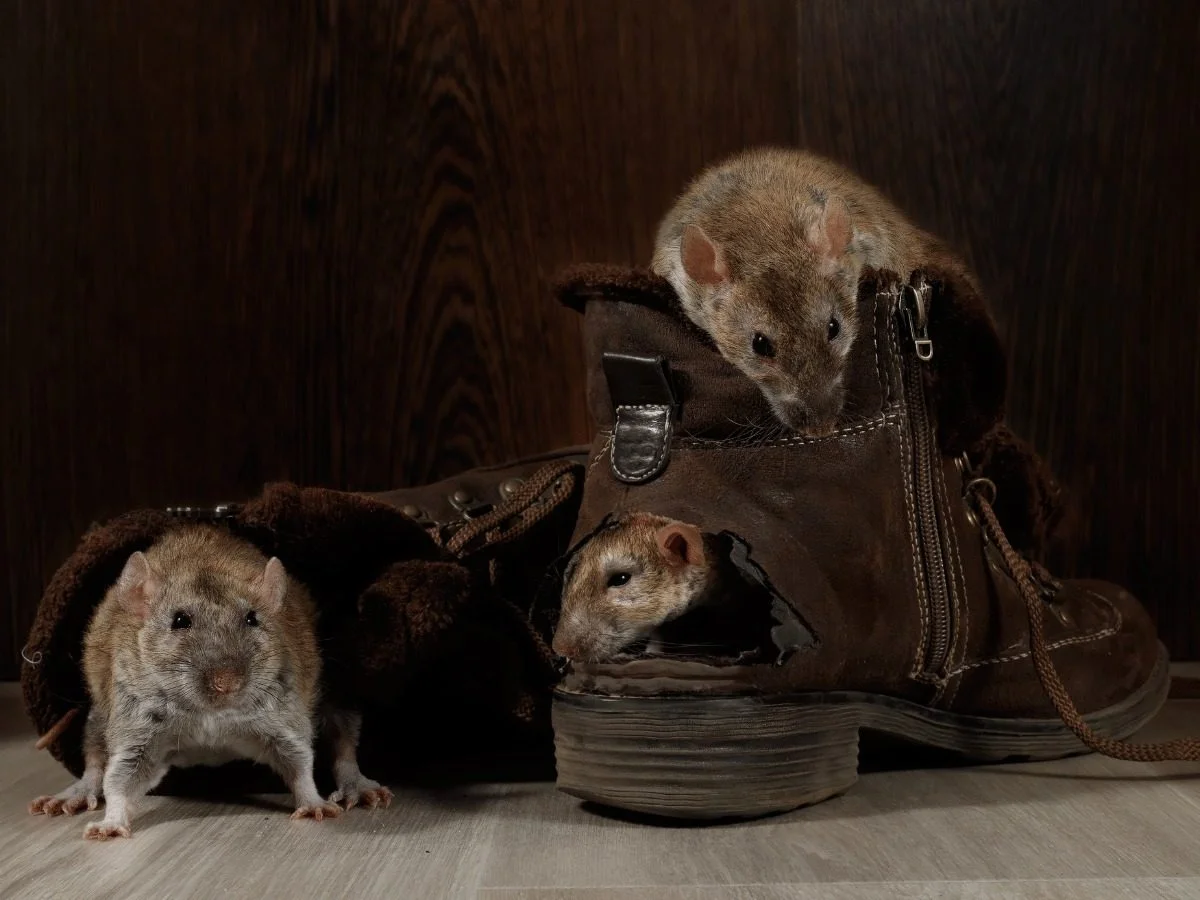
Call (432) 319-8327 — an empty unit is the fastest and cheapest one we can seal.
Call (432) 319-8327Why an empty unit gets worse, not better
No disturbance. Human traffic is a deterrent in itself. Lights, doors, footsteps and vibration keep rodents to the margins and the night. Take those away and they use the whole floor plan in daylight, which means nesting where they would otherwise only travel.
Nobody reports it. This is the expensive part. Every rodent problem is cheap early and dear late, and the whole point of an occupant is that they raise it early. A vacancy removes your detection system.
The AC is off. In an Odessa summer, an unconditioned house runs brutally hot in the attic and warm through the wall voids. Rodents relocate downward and inward, into cavities, base cabinets and the slab perimeter — the places where they do damage to things that cost money to replace.
The landscaping stops being managed. Unwatered beds, unmown grass, volunteer growth against the wall. Cover to within an inch of the building is how animals get from the yard to the shell without ever crossing open ground. See how rodents get in.
Water is still available even when the taps are off. Condensate lines, a dripping hose bib, an evaporative cooler pan, irrigation, a neighbour's yard. In the Permian Basin water is the scarce resource and it decides where rodents settle more than food does.
Cardboard accumulates. Packages left at the door, boxes left from the last move-out, junk mail piling inside the slot. Cardboard is simultaneously shelter and nesting stock.
Anything left behind is nesting material. Half a bag of dry pet food in a utility room, a mattress in a garage, stored curtains, a bin of clothes. See rats in the garage.
Traps and stations from a previous service stop being serviced. An unchecked snap trap catches once. An unchecked bait station is a feeding station with a roof on it.
The turnover window is the cheapest exclusion you will ever buy
Here is the argument in one comparison. The same house, the same holes, two different weeks.
Occupied. Furniture against three walls of every room. Closets full. Base cabinets loaded. The tenant has to be home, which means an evening or a Saturday. You cannot pull a toe-kick panel without moving somebody's kitchen. Half the utility penetrations you need are behind a washer. Every hour on site is coordinated with somebody's life, and anything intrusive gets deferred.
Empty. Every wall reachable. Every closet open. Cabinets clear. No notice required, no scheduling around anyone, no belongings to protect. If the job needs a section of baseboard off or a toe-kick opened to reach a chase, that is a five-minute decision instead of a conversation.
Same work. Radically different cost, duration and quality of finish — and only one of the two versions gets the awkward penetrations done properly.
If you manage rental property in Odessa, the highest-return policy change available to you is a standing rule: the shell gets inspected and sealed at turnover, before the unit is listed. You get the access window exactly once between tenants, and then you lose it for a year or more. Managers running several doors should start with rodent control for property managers.
What we do on a vacant property
Same method as everywhere — remove what is inside, then close the shell so the next wave has nowhere to come in. Full detail on our process. What changes is that we can do all of it properly in one visit.
- Full exterior shell survey. Roofline, fascia, soffit returns, gable and turbine vents, weep holes, slab edge all the way round, hose bibs, utility and AC penetrations, garage door seals and corners.
- Attic inspection to the eaves, under the insulation rather than across it, looking for runways, nesting, droppings and daylight at the roof edge.
- Interior void inspection with the advantage of an empty house — every base cabinet, every closet, behind and under every appliance left in place, the water heater closet, the laundry connections.
- Species confirmation. Roof rats, Norway rats, house mice and pack rats each get worked differently. See rodent identification.
- Removal and shell exclusion, run together. The shell is closed in steel mesh, hardware cloth and metal flashing while one-way exits let residents leave and traps remove the rest — with no occupant to work around and no reason to compromise on placement. Not foam, which a rat opens in a night; the materials argument is on exclusion and proofing.
- Final closure once activity stops. The last managed openings are shut only after the traps have gone quiet, so nothing is sealed in.
- Cleanup, sanitation and odour work. Droppings and nesting removed, contaminated insulation replaced where needed, scent trails neutralised so the building stops advertising itself. See droppings cleanup and attic cleanup and decontamination.
- Carcass search. In a vacant building this is not optional, and it is the section below.
- Written findings and a completed-work record you can put in a file or hand to an owner.
- Follow-up to confirm zero activity before the unit is listed or handed over.
The one that ruins a move-in: a carcass in a cavity
A rodent that dies inside a wall, above a ceiling or under a base cabinet in an occupied home is found in days, because somebody smells it and complains. In a vacant house it sits in a sealed, unventilated, extremely hot building — and the odour is discovered by the first person to walk in and stand still.
That person is usually your new tenant or your buyer, on the day they were supposed to be pleased.
It is also the reason we lead with trapping rather than bait, and the reason that preference gets stronger in a vacant building rather than weaker. A trap produces a carcass in a known location. Poison produces a carcass in an unknown one. If a previous service left bait in a unit that then sat empty, assume there is something to find and let us look for it before you list. That work is on dead rodent removal, and the broader case is on poison-free rodent control.
The same applies to odour with no visible source: see rodent smell in a house.
Vacant houses on the market
A listed house has all of the vacancy problems plus one more: it is being walked through by people whose entire job that afternoon is noticing things.
Droppings in a pantry, a gnawed toe-kick, shredded insulation visible from the attic hatch, or a musky smell in a closed back bedroom will do more damage to a sale than the cost of dealing with any of them. Buyers are also increasingly bringing rodent-specific eyes — that is what our buyer's rodent inspection page exists for, and the same checklist works in reverse as a pre-listing list.
If the house has been empty through a season change, walk it once with the specific intention of looking. Attic, garage, under every sink, inside every base cabinet, and the full slab edge from outside.
Rentals that sit empty on purpose
Odessa has a category of vacancy that other markets do not: property held between crews.
Housing that fills and empties with oilfield activity spends real stretches of the year unoccupied and then absorbs a full load of occupants in a week. Both halves of that cycle are hard on a building — long undisturbed vacancies to establish in, then a sudden influx of food and traffic to sustain a population that is already resident.
The same pattern applies to second properties, inherited houses waiting on a decision, units held between renovation phases, and RVs or trailers parked up for a season. On the last of those, engine bays and undercarriages are their own problem: see rodent and vehicle wiring damage.
The answer in every case is the same and it is unglamorous. Seal the shell once while it is empty, then look at it between occupancies. A closed building does not care whether anybody is home.
Closing up a unit that will sit empty
If a property is going to be vacant for a while, these are the things that actually matter. They are all cheap and none of them substitute for closing the entry points.
- Seal the shell first. Everything below is housekeeping around a sealed building. On an open one it just slows things down.
- Take everything soft out. Mattresses, cushions, curtains, stored clothing, bedding, upholstered furniture.
- Remove all food, including pet food and open pantry goods. Sealed cans are fine; a bag of dry dog food in a garage is a food source with a long shelf life.
- Break down and remove cardboard. All of it.
- Cut the vegetation back off the building, and keep it cut. A foot of clearance at the wall is worth more than most of what people spend on pest control.
- Fix the water. Dripping bibs, condensate lines discharging against the slab, irrigation running on a timer nobody has looked at.
- Stop the mail and the packages, or have somebody collect them. A wedged slot and a pile of boxes at a door are both openings and shelter.
- Close the garage properly, including the seal along the bottom and the two bottom corners, which is where the gap actually is.
- Do not leave unserviced traps or bait behind. An unmonitored station is a liability, not a defence.
- Have somebody walk it. Once a month, in the attic and the garage, with a torch. Ten minutes.
Pricing
Nothing below is a quote, and every figure needs to come from the owner before this page publishes.
| Scope | Typical Odessa range |
|---|---|
| Inspection with written findings | Free |
| Turnover shell check between tenants | Contact us for a free estimate |
| Trapping and removal, active infestation | Contact us for a free estimate |
| Full shell exclusion, empty single-family home | Contact us for a free estimate |
| Attic decontamination and insulation replacement | Contact us for a free estimate |
| Carcass location and removal | Contact us for a free estimate |
| Droppings cleanup and sanitation | Contact us for a free estimate |
| Pre-listing inspection for a house on the market | Contact us for a free estimate |
Call now for direct response — we pick up.
Frequently asked questions
Do I really need rodent control in a house nobody lives in?
Yes, and often more than in an occupied one. Food is the easiest of a rodent's needs to satisfy elsewhere; undisturbed shelter is the hardest, and an empty building supplies exactly that. You have also lost your detection system, because there is nobody there to hear it and report it early.
When is the best time to rodent-proof a rental?
Between tenants, before the unit is listed. An empty unit gives full access to every wall, closet and cabinet with no notice, no scheduling and no belongings to protect, which makes the same work faster, cheaper and better finished than it will ever be again.
Is it cheaper to seal an empty house than an occupied one?
It is faster and the finish is better, because nothing has to be moved and nothing has to be deferred. Contact us for a free estimate.
My tenant moved out and there is a smell. What is it?
Most often a carcass in a wall cavity, above a ceiling or under a base cabinet, and a closed unconditioned building concentrates it. It needs locating and removing rather than masking, and it is the main reason we trap instead of baiting — a trap leaves the animal somewhere known.
A previous company left bait stations in the unit. Should I leave them?
No. An unserviced station is a sheltered feeding point rather than a defence, and bait left in a building that then sits empty is the usual origin of a carcass nobody can find. Have them removed and have the building checked.
How long can a vacant property sit before this becomes a problem?
There is no honest single number — it depends on the season, the pressure around the building and how open the shell already is. What is reliable is the direction of travel: an open building with nobody in it gets worse, and it does so silently.
Will sealing the house alone fix it, or do you have to trap too?
Sealing alone is the wrong answer if animals are already inside, because a tight building with a live population in it and no way out is a carcass problem waiting to happen. The two run together instead: the shell gets closed while one-way exits let residents leave and traps remove the rest, and the last openings are only closed once activity has stopped.
Can you work on a property with the utilities off?
Generally yes. We can discuss power requirements during your consultation.
Do you handle houses that are on the market rather than rented?
Yes, and the same list applies. A vacant listing is walked by people whose job that day is noticing things, and rodent evidence costs a sale more than the work costs to do.
What about an RV or trailer parked up for the season?
Same principle, different envelope, and engine bays and undercarriages need their own attention. Start with rodent and vehicle wiring damage.
Main pages Rodent control in Odessa, TX·All rodent services·How we work·What it costs