
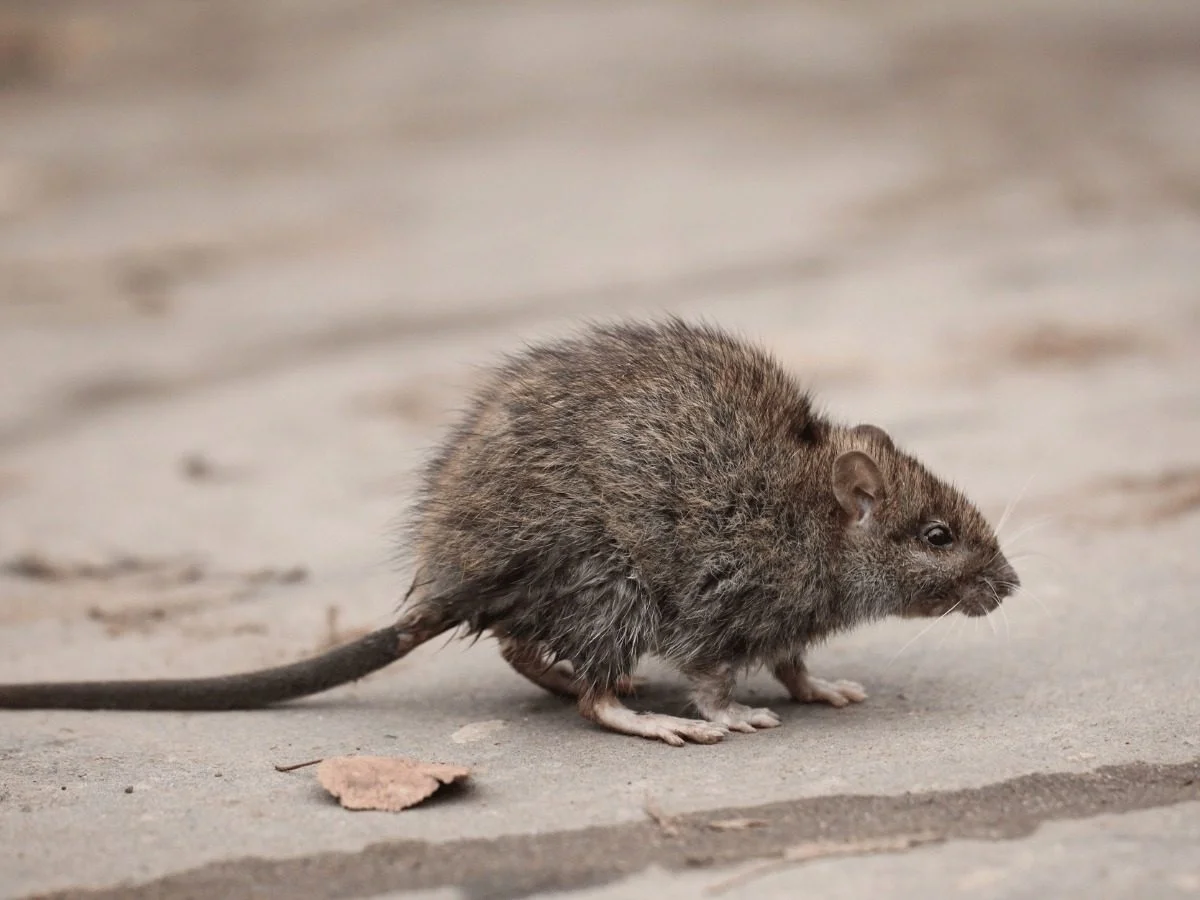
First: a pack rat is not a true rat
"Pack rat" and "woodrat" are two names for the same animal, in the genus Neotoma — a native rodent completely separate from the roof rat and Norway rat, which are non-native Rattus. Two woodrat species live around Odessa and the Permian Basin, and locally both get called pack rats:
- White-throated woodrat (Neotoma albigula)
- Southern plains woodrat (Neotoma micropus)
For a homeowner's purposes they behave the same way and are handled the same way.
How to identify a pack rat
| Feature | Pack rat / woodrat |
|---|---|
| Tail | Furred and bicolored — the diagnostic mark |
| Ears | Large |
| Eyes | Large |
| Throat / chest | Pale to whitish |
| Belly | Pale |
| Body | Roughly rat-sized, softer-furred than a true rat |
| Overall look | More "cute" and squirrel-like than a sewer rat |
The one mark that settles it: the tail
A true rat has a naked, scaly tail. A pack rat has a furred tail. If the tail has fur on it, you are looking at a woodrat, not a Rattus — and the treatment approach is different. Add the large ears, large eyes, and pale throat and you have a confident ID.
The nest is a dead giveaway: the midden
Pack rats are compulsive builders and hoarders. They construct bulky nests called middens out of sticks, cactus pads, dry plant material, and whatever else they can drag in — and they famously collect and hoard objects, sometimes swapping one shiny item for another ("trading"). A midden can be:
- Piled at the base of a cactus, mesquite, or shrub
- Stuffed into a shed, a barn, or a wood or debris pile
- Built into stored equipment, a parked vehicle, or an RV
- Packed into an AC condenser unit or an engine bay — the two that cost you money
If you find a pile of sticks, cactus, and random debris where it does not belong — under the hood, in the base of the AC unit, in a stored camper — that is a midden, and that is a pack rat.
Why pack rats wreck wiring
Pack rats chew constantly (like all rodents, their incisors never stop growing), and they actively harvest soft, pliable material for nests — which is exactly what a modern wiring harness looks and feels like to them. The result, all over the Permian Basin:
- Vehicle wiring damage — chewed harnesses, sensors, and insulation in cars, trucks, and equipment that sit parked, especially overnight and in cooler weather. Full detail and prevention: rodent vehicle & wiring damage
- AC condenser damage — chewed low-voltage wiring and control leads, plus a nest packed into the base of the unit. Detail: AC unit rodent control
- Shed, barn, and outbuilding wiring, and stored-equipment damage
Worth knowing
On the "soy wiring" claim: you will read that modern soy-based wire insulation attracts rodents. The evidence is contested — automakers dispute it and consumer lawsuits over it have largely been dismissed. Rodents chew wiring regardless of what it is made of, because chewing and nest-gathering are what they do. We treat the problem by keeping the animal away from the wiring, which works no matter how that debate resolves.
Why this is a West Texas problem specifically
A pack rat is not a one-time infestation you eliminate and forget. It is a native animal living in the landscape around you, and honesty matters here:
- It lives out there year-round. The mesquite, cactus, caliche, and open range of Ector County are its natural habitat. You are not going to remove pack rats from West Texas.
- What you can do is make your property and your vehicles a bad choice — reduce the harborage, break up the middens, seal the structures, and protect the vehicles and AC unit.
- Rural and edge properties feel it most — West Odessa, Gardendale, and anywhere backing up to open land. So do oilfield sites full of parked equipment.
Anyone who promises to permanently eliminate a native species from your desert property is overselling. The realistic, honest goal is continuous pressure management — and that is what actually keeps your wiring intact.
How we handle pack rats
- Free inspection. We confirm it is a woodrat and not a true rat, locate the midden(s), and identify what is drawing them and where they are getting into structures and vehicles. Detail: rodent inspection
- Midden removal. The nest is broken up and removed — because as long as an established midden sits against your house, shed, or AC unit, it is an active base of operations.
- Trapping. The active animals are trapped out.
- Habitat correction. Cactus, brush, wood, and debris piles against structures reduced; harborage cut back; the staging ground made less inviting.
- Structure exclusion. Sheds, outbuildings, and homes sealed with galvanized steel mesh and rigid, chew-proof material. Core service: rodent exclusion & proofing
- Vehicle and AC protection. For engine bays and condensers, the approach is habitat and deterrence around the unit — never anything that blocks AC airflow or manufacturer service clearances, and never anything we would call an electrical repair. See vehicle wiring damage and AC unit rodent control.
- Damage documented. Chewed wiring photographed for the appropriate licensed trade — an electrician, a mechanic, or an HVAC tech. We do not perform electrical, mechanical, or HVAC repair.
Frequently asked questions
What is a pack rat?
A pack rat, also called a woodrat, is a native West Texas rodent in the genus Neotoma — a different animal from the non-native roof rat and Norway rat. It has a furred, bicolored tail, large ears and eyes, and a pale throat, and it builds bulky stick-and-debris nests called middens. Around Odessa, both the white-throated woodrat and the southern plains woodrat occur.
How do I tell a pack rat from a regular rat?
Look at the tail. A pack rat has a furred tail; a true rat (roof rat or Norway rat) has a naked, scaly tail. Pack rats also have larger ears and eyes and a pale throat, and they build obvious stick-and-cactus nests, whereas true rats do not. The furred tail is the single most reliable field mark.
What does a pack rat nest look like?
It is a bulky, messy pile called a midden, built from sticks, cactus pads, dry plant material, and collected debris. Middens turn up at the base of a cactus or shrub, inside sheds and barns, in wood and debris piles, and — expensively — packed into engine bays and the base of AC condenser units. Finding a stick-and-debris pile where it does not belong is a reliable sign of a pack rat.
Why do pack rats chew car and AC wiring?
Because they gather soft, pliable material for their nests, and a wiring harness fits that description, and because like all rodents they gnaw constantly to manage ever-growing incisors. You may read that soy-based wire insulation attracts them, but that claim is contested and rodents chew wiring regardless. The effective fix is keeping the animal away from the wiring, not changing the wiring.
Can you get rid of pack rats permanently?
Not permanently, and any company that promises that is overselling — pack rats are a native species that lives in the desert around Odessa year-round. What genuinely works is making your property a poor choice: removing middens, cutting back harborage, sealing structures, and protecting vehicles and the AC unit. That is continuous pressure management, and it is what keeps your wiring intact.
There's a pack rat nest in my parked truck. What do I do?
Have the midden removed and the animal trapped out, then address why the truck is attractive — where it is parked relative to harborage, and how long it sits. Prevention around parked vehicles and equipment is a specific problem in the Permian Basin, and there are real steps that reduce it. See rodent vehicle & wiring damage. Chewed wiring itself is repaired by a mechanic — we document it and keep the animal out.
Do pack rats get into houses?
They can, especially into sheds, garages, barns, and outbuildings, and into homes on rural and edge properties backing up to open land. More often the house itself is spared while the vehicles, the AC unit, and the outbuildings take the damage. A proper inspection checks all of it, because on an edge-of-town property the pack rat pressure is on the whole site, not just the main structure.
Are pack rats dangerous or just destructive?
The main cost is destruction — chewed wiring, which is expensive and a fire concern, plus nesting damage. Like other rodents they can carry disease organisms and their nests harbor other pests, so droppings and nesting should be cleaned wetted and with protection, never dry-swept. But for most people the pack rat is felt in the repair bill, not the doctor's office.
Main pages Rodent control in Odessa, TX·Odessa rodent identification·How we seal a building