
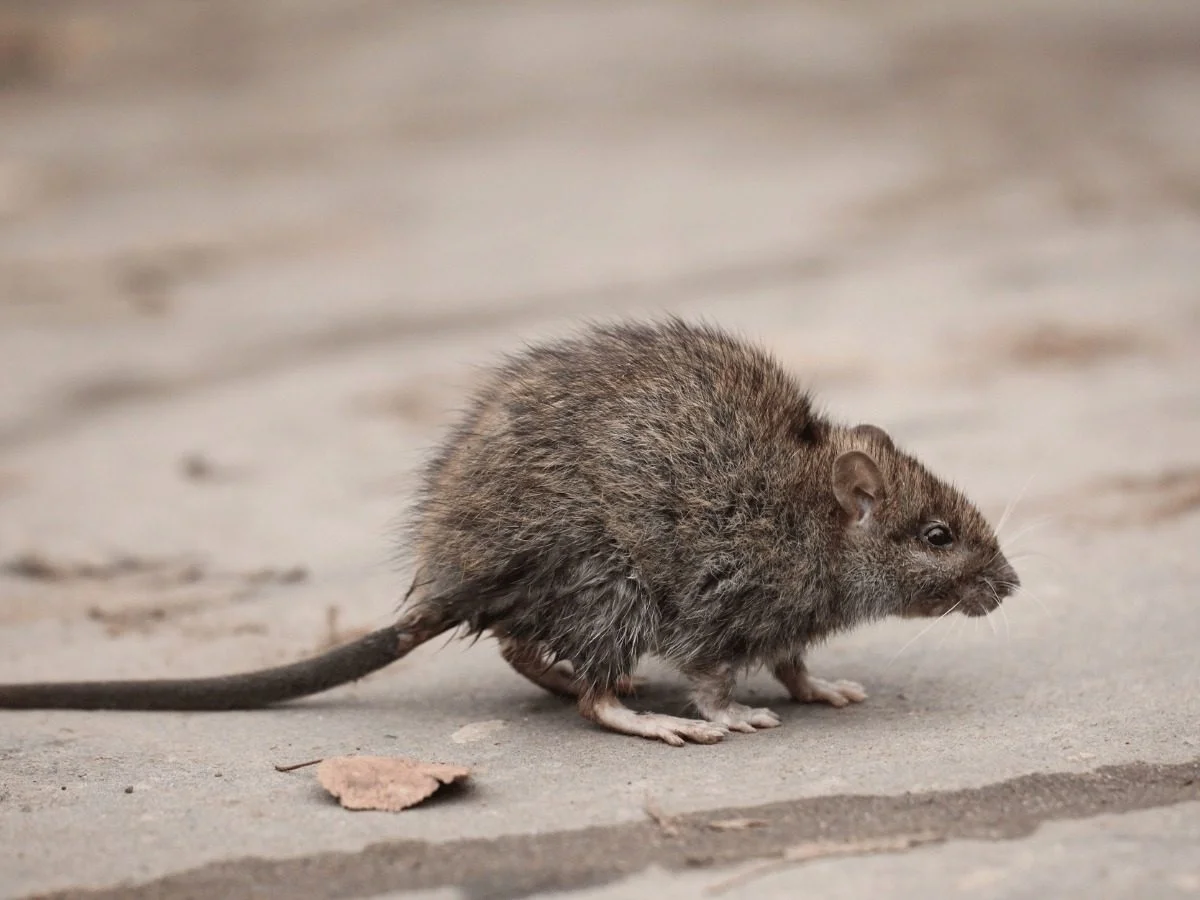
What makes Notrees different
There is no competing shelter. Every structure — a house, a shop, a pump house, a metal building, an equipment skid, a job trailer — is disproportionately attractive because there's nothing else. Concentrated pressure on few buildings is the defining condition here.
Pressure is permanent, not seasonal. In town, rodents move indoors mainly at the first hard cold front. Out here, structures are already the best available option year-round, and the cold front just makes it urgent.
Wind carries everything. Blowing dust and grit degrade seals, sweeps, weatherstripping, and caulk faster than they'd fail in town, and it settles into thresholds and door tracks. West Texas UV finishes the job. A seal installed and never checked is a seal that's already failing.
Grassland species dominate. Cotton rats in grass, pack rats in stored equipment and brush, deer mice in outbuildings and enclosed spaces.
Energy and oilfield infrastructure is part of the landscape, which brings a category of rodent problem almost nobody writes about: enclosures and cabinets. More on that below.
Distance is real. Notrees is a drive from Odessa and we'd rather be straight about scheduling than promise a window we can't hit. Call for details on scheduling and service area coverage.
Rodents in control cabinets and electrical enclosures
This is a genuinely different problem from rodents in a house, and the consequences aren't the same either.
Why they choose an enclosure. It's dry, sheltered, off the ground, out of the wind, and often slightly warm. In open country with nothing else available, a sealed cabinet is the best real estate for miles. Mice need only about a quarter-inch gap to get into one.
Where they get in:
- Conduit entries and unused conduit stubs — the most common by far, and a conduit run is a highway from one enclosure to the next
- Cable glands and unsealed penetrations
- Missing or damaged blanking plates and unused knockouts
- Door gaskets — degraded, compressed flat, torn at the corners, or a door that's been left ajar
- Vents and drain openings on the bottom of an enclosure
- The bottom of a cabinet on a skid or a stand, where nothing was ever closed
- The gap where a cabinet meets its base or pedestal
What they do once they're in: gnaw insulation off conductors, nest on and around components, urinate and defecate across terminals and boards, and pull in grass and nesting material. That's a fault, a trip, a false reading, or a fire risk — and it's a maintenance cost far out of proportion to the size of the animal.
What actually works:
- Close conduit entries and unused stubs properly, and treat the whole conduit network as one connected system rather than cabinet by cabinet
- Blanking plates in every unused knockout
- Gaskets inspected and replaced, not taped
- Vent and drain openings screened in metal — stainless mesh, not plastic
- Doors latched. A door left unlatched overnight in open country is an invitation
- Vegetation cleared back from pads, skids, and pedestals, and no stored material against them
- Monitoring, because these get checked rarely. An enclosure inspected twice a year is a problem discovered late
⚠ Scope, plainly stated: we do not perform electrical work. We inspect, trap, exclude at the building and enclosure envelope where it's safe and appropriate to do so, document what we find, and any repair to conductors, components, or energized equipment goes to your qualified electrical personnel. Access to energized or restricted equipment happens on your terms and your procedures, not ours.
We service industrial and energy sites with proper coordination. Call for details on scheduling and service area coverage.
Oilfield facility rodent control » · Commercial rodent control » · Warehouse & yard »
Sealing a house or shop in open country
The list is the standard list. What's different is that out here it has to be complete, because there's no easier target next door to absorb the pressure.
- Garage and shop door bottom corners and thresholds — the number one entry point in this area, and blowing sand and grit make it worse
- Every exterior door threshold and sweep, checked with the door closed and a light behind it
- Slab edge, and the base of metal walls — corrugated metal leaves a gap at every rib where the panel meets the slab
- Weep holes — covered with a purpose-made cover or stainless mesh, never plugged solid. They drain the wall
- Utility penetrations — water, gas, electrical, conduit, hose bibs, well and pressure-tank lines
- The AC line-set entry into the wall. More »
- Dryer vent flap
- Roll-up doors, man doors, and wall vents on shops and outbuildings
- Roofline — fascia and soffit corners, vents rescreened in metal
- A clear strip around the foundation. Nothing stacked against a wall, no vegetation touching it
Materials: galvanized hardware cloth, sheet metal, and mortar hold. Expanding foam and steel wool don't — foam gets chewed and steel wool rusts and pulls out. Foam belongs behind metal as an air seal, nowhere else. Full method » · Every entry point »
And schedule a look at your seals. In this wind and this sun, door sweeps, gaskets, and weatherstripping don't last the way they would in town. Checking them annually is the cheapest thing on this page.
What we find most out here
- House mice — in houses, shops, offices, job trailers, and enclosures. Droppings ⅛–¼ inch, rice-sized with pointed ends. House mice »
- Cotton rats — grassland animals that move into structures after mowing, clearing, or a cold front. Cotton rats »
- Pack rats — in stored equipment, skids, engine bays, and brush. Look for a midden of sticks, cactus, wire, and foil. Pack rats »
- Deer mice — genuinely more likely on rural property, and a reason to be careful in enclosed spaces. Never dry-sweep droppings or nesting material. Deer mice » · Rodent health risks »
Identify Odessa rodents » · Droppings ID »
Frequently asked questions
Why does my building get so many rodents when there's nothing around for miles?
That's exactly why. Rodents need shelter, and in open country with no trees, hedges, alleys, or neighboring structures, your building is the only shelter available — so it absorbs pressure that would be spread across dozens of options in town. It also means the pressure is year-round rather than concentrated at the first cold front. The upside is that the fix is entirely within your control: a completely sealed envelope has nothing to offer, regardless of how much open land surrounds it.
How do mice get inside a sealed electrical or control cabinet?
Usually through the conduit. Conduit entries and unused conduit stubs are the most common route, and a conduit network functions as a connected highway between enclosures, so sealing one cabinet while the run stays open accomplishes little. After that it's cable glands and unsealed penetrations, missing blanking plates in unused knockouts, degraded or flattened door gaskets, bottom vent and drain openings, and the gap where a cabinet meets its base. A mouse needs roughly a quarter-inch gap.
What damage do rodents do in a control cabinet?
They gnaw insulation off conductors, nest on and around components, bring in grass and nesting material, and contaminate terminals and boards with urine and droppings. The result is faults, nuisance trips, false readings, corrosion, and a genuine fire risk — a maintenance cost wildly out of proportion to the size of the animal. Because enclosures are opened rarely, the damage is usually well advanced before anyone sees it.
Does the wind out here really affect rodent-proofing?
It does, and it's underrated. Blowing dust and grit abrade door sweeps, gaskets, weatherstripping, and caulk, work into thresholds and door tracks, and combine with West Texas UV to shorten the life of every soft seal on a building. A seal installed and never rechecked is a seal that's already failing, which is why metal closures last out here and why an annual look at sweeps and gaskets is the cheapest maintenance you can do.
Do you work on industrial and energy sites?
We service industrial and energy sites with proper coordination. Call for details on scheduling and service area coverage.
Do you drive out to Notrees?
Call for details on scheduling and service area coverage.
Can you do the electrical repairs too?
No, and you shouldn't want a pest company to. We inspect, trap, seal the building and enclosure envelope where it's safe and appropriate, and document the damage we find with photos — then repairs to conductors, components, or energized equipment go to your qualified electrical personnel. Access to energized or restricted equipment happens under your procedures, not ours.
Main pages Rodent control in Odessa, TX·Full service area·What it costs·Exclusion & proofing