
What makes Goldsmith different
Working oilfield country in every direction. Yards, tank batteries, well sites, and equipment storage all provide cover, and rodent pressure from surrounding land is permanent rather than seasonal.
Open land right at the edge of everything. There isn't much buffer. Cotton rats, pack rats, and deer mice are all in play here in a way they aren't in central Odessa.
RV and travel-trailer housing is common — and it's the least rodent-resistant structure in the Permian Basin.
Structures sit unoccupied. Crew housing, offices, and equipment buildings go quiet between hitches, and an unoccupied structure is a rodent's first choice. Vacant property rodent control »
Distance matters. Goldsmith is a drive from Odessa, so scheduling is different than an in-town call. We'd rather be straight with you about that than promise a window we can't hit. Call for details on scheduling and service area coverage.
Rodent-proofing an RV, travel trailer, or camper
This is the part nobody covers. Work it from the ground up.
1. The underbelly is the front door
Most RVs have a coroplast or fabric underbelly wrap. Once it's torn, sagging, or opened up for a repair, the entire floor cavity is open — and that cavity runs the length of the unit and connects to almost everything.
- Walk the whole underside and look for tears, sagging panels, missing fasteners, and pulled-loose seams
- Anywhere a repair was done and the panel was cut and taped back. Tape is not a repair
- Patch with material rodents can't reopen — galvanized hardware cloth or sheet metal backing, mechanically fastened, then sealed. Tape alone will not hold
2. Every place a line drops through the floor
This is the second most common entry, and it's usually wide open.
- Fresh water, drain, and sewer lines
- Propane lines
- Electrical and low-voltage runs
- Heated water-line and tank heater wiring where it's fitted
- Furnace and water-heater compartments — check the interior side of the wall too
Seal these in metal at the floor, not with foam. Foam is fine as an air seal behind metal; on its own it's a chew toy.
3. Storage bays and pass-throughs
Basement storage bays are frequently open to the floor cavity and to each other. Check the back and top corners of every bay with a light, and look at the door seals — a compartment door that doesn't seal is a wide-open entry.
Keep no food, no pet food, no feed, and no paper or cardboard in the bays. That's the most common attractant on an RV, and it's a five-minute fix.
4. Slide-outs
A slide-out is a hole in the wall with a rubber seal on it. Inspect the seals and wipers top, bottom, and both sides, and look at the corners specifically — that's where they fail. Slide out and slide in changes the geometry, so check it in the position you actually keep it in.
5. The engine bay, if it's motorized
Pack rats nest on engine blocks and chew wiring, and a unit that sits for weeks is exactly what they're looking for. Open the hood and look before you turn a key after any long sit. Rodents in vehicles »
6. Steps, doors, and vents
- Entry door threshold and the bottom corners of the door
- Screen door and the gap under the main door when it's closed
- Furnace, water heater, and refrigerator vents — screened in metal, not plastic
- Roof vents and any degraded roof sealant
- The gap where a slide, awning, or accessory was mounted
7. What's around it matters as much as the unit
- Nothing stored underneath. Under an RV is prime harborage, and stored material makes it perfect
- Vegetation and weeds cleared back from all sides
- No feed, pet food, or trash within reach — sealed metal containers only
- Standing water eliminated — drips, a leaking hose bib, low spots. Water is a strong draw in a Permian Basin summer
- Skirting, if you use it: closed to grade with galvanized hardware cloth, not just vinyl or foam board. More on skirting »
One honest note: an RV is a light structure and some of it can't be made rodent-tight the way a house can. What can be done — and it works — is closing the underbelly and the floor penetrations, screening the vents in metal, keeping the bays empty of anything edible, and keeping the ground around it clear.
We service RVs, travel trailers, and campers.
If it's a house, a shop, or an office
The standard work applies, weighted toward ground level:
- Garage and shop door bottom corners and thresholds — the number one entry in this area
- Every exterior door threshold and sweep
- Slab edge, and the base of metal walls where siding meets slab — corrugated metal leaves a gap at every rib
- Weep holes — covered with a purpose-made cover or stainless mesh, never plugged solid
- Utility penetrations — water, gas, conduit, hose bibs, well and pressure-tank lines
- The AC line-set entry into the wall. More »
- Roll-up doors, man doors, and vents on shops and outbuildings
- Roofline — fascia and soffit corners, vents rescreened in metal
- A clear strip around the foundation, nothing stacked against the wall
Full method » · Every entry point » · Oilfield facility rodent control »
What we find most out here
- House mice — in RVs, houses, shops, and offices. The most common animal by far. House mice »
- Pack rats — in equipment, engine bays, storage bays, and under parked units. Look for a midden of sticks, cactus, wire, and foil. Pack rats »
- Cotton rats — in grass and brush, entering structures after mowing, clearing, or a cold front. Cotton rats »
- Deer mice — genuinely more likely on rural and oilfield property than in town. Never dry-sweep droppings or nesting material, especially in an enclosed space like a storage bay or an RV floor cavity. Deer mice » · Rodent health risks »
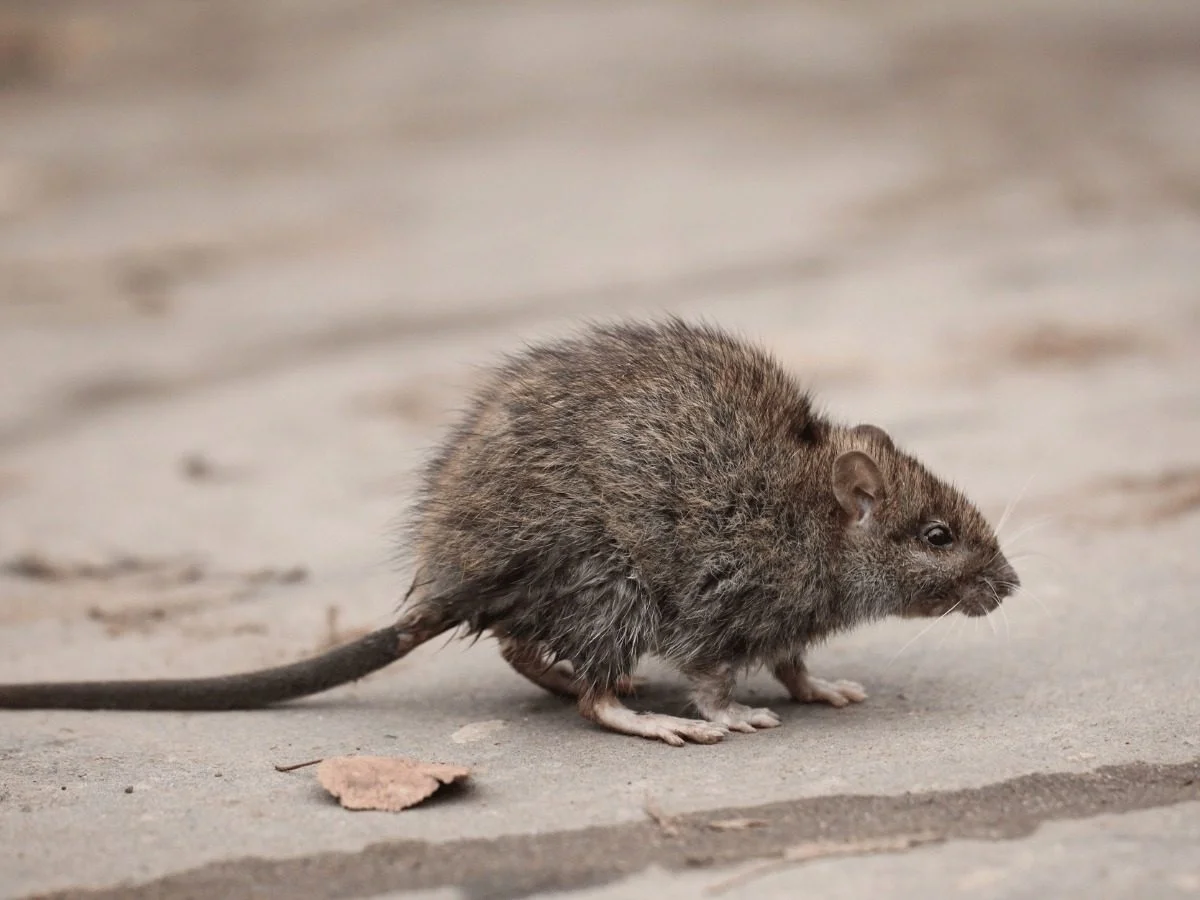
- Norway rats — around trash, water, and crew areas. Burrows 2–4 inches in soil.
Identify Odessa rodents » · Droppings ID »
Frequently asked questions
How do mice get into an RV or travel trailer?
Almost always from underneath. The coroplast or fabric underbelly wrap opens up from a tear, a sagging panel, or a repair that was taped instead of patched, and once it's open the whole floor cavity is accessible and connects to nearly everything. From there they use the floor penetrations for water, drain, sewer, propane, and electrical lines, then come up into cabinets, the furnace and water heater compartments, and the living space. Storage bays that open to the floor cavity are the second route.
How do I seal an RV underbelly properly?
Back the opening with galvanized hardware cloth or sheet metal, fasten it mechanically, then seal around it. Tape, foam alone, and a fresh piece of coroplast by itself all get reopened, because rodents chew through anything soft and pull anything adhesive. Floor penetrations get the same treatment — metal at the floor, with foam only as a secondary air seal behind the metal, never as the barrier.
What attracts mice into a camper the fastest?
Food in the storage bays, pet food, feed, and cardboard or paper, followed by water. Empty the bays of anything edible or nestable, keep food inside in hard sealed containers rather than bags or boxes, and pick up pet bowls at night. Outside the unit, clear vegetation back on all sides, store nothing underneath, and fix drips and low spots — under an RV is prime harborage and stored material makes it ideal.
I found droppings in my RV after it sat for a few weeks — what now?
Ventilate before you do anything, then wet everything down with a disinfectant solution rather than dry-sweeping or vacuuming — that rule matters most in a small enclosed space like an RV, where deer mice are also more likely than in town. Wear gloves and a proper mask, bag it wet, and check the underbelly, floor penetrations, and storage bays for how they got in, because cleaning without closing the entry just resets the clock. This is general safety information, not medical advice.
Are mice in an RV a wiring problem?
They can be, and pack rats especially. Rodents gnaw insulation off wiring and build nests in engine bays and enclosed compartments, and on an RV that means 12-volt runs, appliance wiring, and heated water-line wiring all sit in the same cavities they travel. We document any damage we find, and electrical and appliance repair goes to a qualified RV technician — we don't do that work.
Do you come out to Goldsmith?
Call for details on scheduling and service area coverage. This question is the first thing anyone in a small town outside Odessa asks.
Is a shop or metal building harder to seal than a house?
Different, not necessarily harder. Corrugated metal walls leave a gap at every rib where the panel meets the slab, and roll-up doors, sliding door tracks, and man-door thresholds are the usual openings — all of which close properly with metal closure strips, hardware cloth, and door seals. The part that doesn't work is treating the inside while those gaps stay open, which is why a shop that gets sprayed every month still has mice.
Main pages Rodent control in Odessa, TX·Full service area·What it costs·Exclusion & proofing