
Why removal alone never ends a rodent problem
Here is the math that most rodent calls skip.
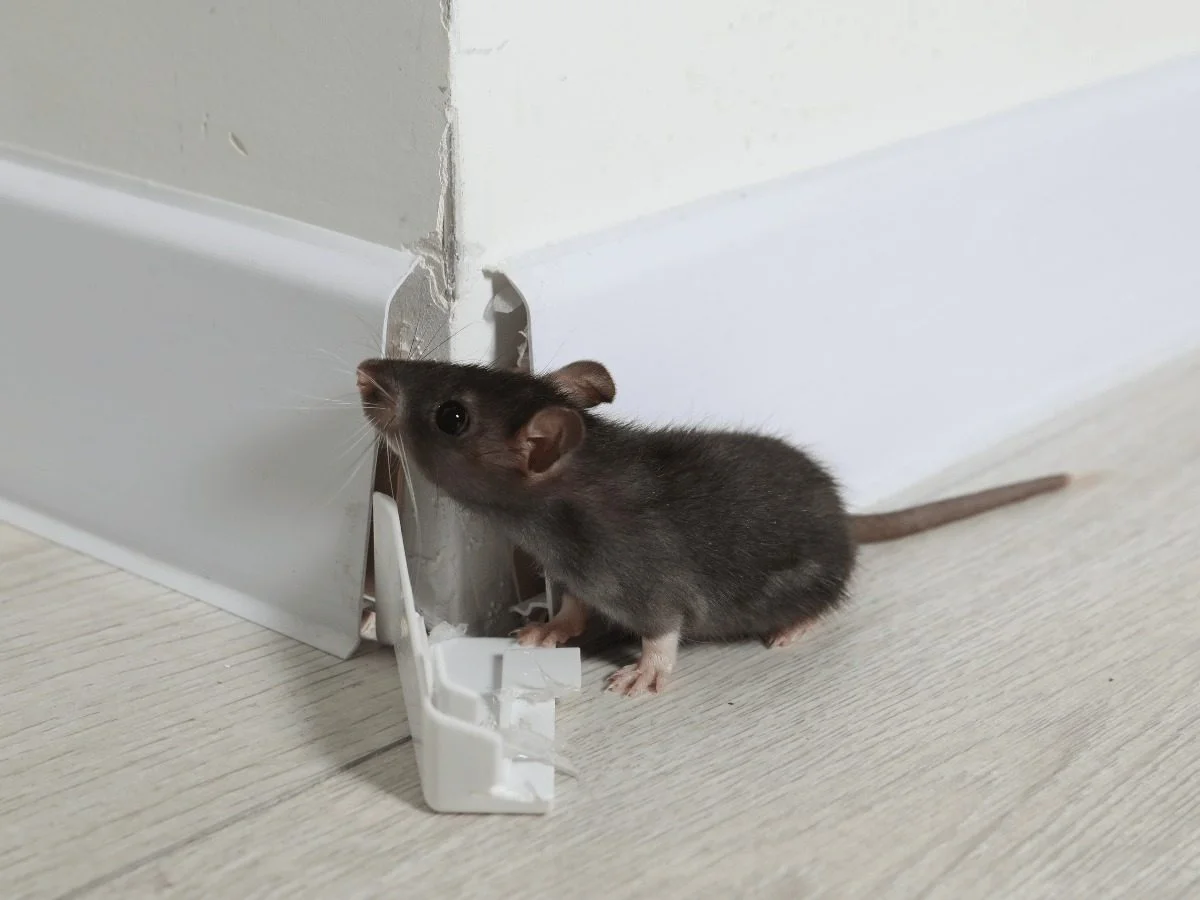
A house mouse can slip through a gap about ¼ inch wide — the width of a dime. A rat needs about ½ inch — a quarter. Those gaps exist by the dozen on a typical Odessa home: around plumbing penetrations, at the corners of garage doors, along rooflines, at AC line sets, in foundation cracks.
Now remove the animals that are inside. That is real progress, and it is half the job. It does absolutely nothing to the hole. Next week, next cold front, next generation — they come back through the same opening, and you are on the phone again.
That is not a pest problem. It is a construction problem wearing fur. And it needs someone who seals buildings for a living, not someone running a bug route.
Exclusion flips the economics. You pay once to close the building, instead of paying quarterly forever to thin out whatever wandered in.
What we seal, and what we seal it with
Materials matter more than anything else in this trade. Rats gnaw through expanding foam and silicone caulk in a single night — we have pulled chewed foam out of homes that were "rodent-proofed" by someone else the year before.
Here is what actually holds:
| Material | Where it goes | Why it works |
|---|---|---|
| Galvanized steel mesh / hardware cloth | Vents, weep holes, pipe chases, roofline gaps | Teeth cannot get purchase on woven steel |
| Metal flashing & sheet metal | Fascia, eave gaps, garage door edges, door sweeps | Rigid, chew-proof, weather-tight |
| Mortar & concrete patch | Foundation cracks, slab-edge gaps, block voids | Permanent, matches the structure |
| Copper or stainless wool | Irregular voids behind pipes | Packs into odd shapes where mesh won't sit |
| *Sealant — as a finish, never the barrier* | Over the top of steel | Weatherproofs the repair; it is not the repair |
If a contractor tells you a can of spray foam is a rodent seal, you have learned something important about that contractor.
The entry points we find on Odessa homes
Every house is different, but after enough Permian Basin inspections you learn where to look first:
- Roofline, eaves, and fascia gaps — warped or shrunken fascia board leaves a straight run into the attic. The #1 roof rat highway.
- Attic and gable vents — often screened with plastic or nothing at all.
- Plumbing and AC line penetrations — the hole is always cut bigger than the pipe. Almost never sealed properly by the builder.
- Garage door corners and worn bottom seals — the two bottom corners are the single most common ground-level entry we find.
- Foundation cracks and slab-edge separation — our caliche soil shifts and settles, and it opens gaps that did not exist when the house was built.
- Weep holes in brick veneer — necessary for drainage, so they cannot be filled. They get stainless weep-hole covers instead.
- Dryer, bath, and range vents — flapper broken or missing, screen rusted out.
- Utility and electrical penetrations — meter bases, conduit, low-voltage lines.
- Crawl space vents and access doors — see crawl space rodent control.
- Where the porch, patio, or add-on meets the original structure — different slabs, different settling, reliable gap.
Want the full illustrated breakdown? See How Rodents Get Into Odessa Homes »
Why Odessa buildings need this more than most
This is not a generic playbook with your city's name pasted in. West Texas creates its own entry points:
- Caliche soil movement. Our hard, shifting caliche expands and contracts with moisture. It cracks slabs and separates additions from main structures — opening new doorways every year, in houses that were sealed tight when built.
- Extreme heat. Weeks over 100°F push rodents toward shade, moisture, and cool air. That means AC line chases, garage interiors, and the shaded north side of the foundation.
- Hard cold snaps. A Permian Basin cold front sends rats and mice indoors within hours. Our call volume spikes from the first freezing night onward.
- Dust storms and long dry spells. Blowing dust and no ground moisture drive rodents toward any structure offering cover.
- Boom-era and mixed-age housing stock. Odessa built fast in several waves. Fast building leaves gaps, and decades of settling widens them.
- Open land at the city edge. West Odessa, Gardendale, and the Ector County fringe sit against fields and mesquite where deer mice, cotton rats, and pack rats live year-round and press inward.
Seasonal detail: Odessa Rodent Seasonal Calendar »
How a full exclusion job runs
- Free inspection and entry-point mapping. We walk the property inside and out — attic, garage, foundation perimeter, roofline, AC lines, plumbing penetrations, and any outbuildings. We confirm the species from droppings and runs, and we map every opening. You get the findings before any work is quoted. Details: rodent inspection.
- The seal. We close every mapped opening with steel, mesh, flashing, or mortar — the right material for that specific gap. This is the bulk of the labor and the part that lasts.
- Removal of what's already inside. Sealing a building with an active population inside is a rookie mistake — it traps them in your walls. So we clear them with snap traps and one-way exit doors as the seal goes up. See rat control and mouse control.
- Cleanup and scent-trail elimination. Droppings, urine, and nesting material carry pheromone trails that actively advertise your house to the next rodent. We remove the contamination and kill the trail. See attic cleanup & decontamination and droppings cleanup.
- Follow-up verification. We come back and confirm zero activity. If something is still moving, the job is not finished.
- The entry points in writing. You get a list of what was closed and where, so the work is checkable later instead of taken on trust.
Ready for step one? Call (432) 319-8327 or call (432) 319-8327.
One-time exclusion vs. an ongoing service plan
Both exist, and they answer different questions.
| Exclusion (what we do) | Recurring service plan | |
|---|---|---|
| Addresses the cause | Seals the openings | Openings stay open |
| Timeline | One project, then done | Indefinite, by design |
| Long-run cost | Higher once, then near zero | Lower per visit, forever |
| Also fixes | Drafts, energy loss, insect entry | Nothing structural |
| Works while you are away | A sealed hole is always sealed | Only between service visits |
Ongoing monitoring has a legitimate place. A large commercial site with constant dock traffic cannot be sealed against the outside world the way a house can, and repeat visits are the right answer there — that is why commercial rodent control is a different conversation. For a house in Odessa, the opening is finite and closable, which makes sealing it the higher-value spend.
What exclusion also gets you
Sealing a building for rodents has side effects people do not expect:
- Lower cooling bills. Every gap we close is a gap your AC was fighting. In a West Texas summer that is not a rounding error.
- Fewer insects. The same openings admit scorpions, spiders, crickets, and roaches.
- Less dust intrusion. Meaningful during dust storm season.
- Protected insulation. Rodents flatten and foul insulation, destroying its R-value. Sealing them out protects the investment.
- Documentation for resale. A sealed, documented home is one less thing to negotiate over at inspection. Relevant for new homebuyers.
Frequently asked questions
What is rodent exclusion?
Rodent exclusion is the process of locating every opening a rodent can use to enter a building and permanently sealing it with chew-proof materials like galvanized steel mesh and metal flashing. It addresses the cause of the infestation — the opening — rather than only the animals that came through it.
How much does rodent exclusion cost in Odessa?
Three things set the number: the size of the home, how many entry points there are, and how accessible they are — a weep hole at eye level and a roofline gap over a two-storey pitch are not the same work. The inspection is free, so you get a firm number before committing rather than an estimate that moves. Contact us for a free estimate. See what drives the price.
How long does a rodent exclusion job take?
It depends on the count and the access more than the square footage — the number of openings, the roof pitch, and how much of the work is in an attic. We give you the timeline with the quote, not after, so you know before anything starts whether this is a single visit or a multi-day job.
Will you seal rodents inside my walls?
No. Sealing a building with an active population still inside is a mistake that creates odor problems in the walls. We clear the active rodents with traps and one-way doors while the seal goes up, then verify zero activity at follow-up.
Can't I just use spray foam or caulk myself?
Rats and mice chew through expanding foam and silicone caulk easily — often within a night. Foam and sealant are useful as weatherproofing over a steel barrier, but they are not a rodent seal on their own. This is the most common reason DIY proofing fails.
What do I get in writing?
The entry points we closed and where they were. That is the part worth having on paper, because it is the part you or the next inspector can go and check — a sealed weep hole or a flashed fascia gap is visible work, and a list of them turns the job into something verifiable rather than something you took on trust.
How small a gap can a mouse actually get through?
About ¼ inch — roughly the width of a dime. A rat needs about ½ inch, roughly a quarter. This is why "I don't see any holes" is so common: the openings that matter are far smaller than people expect.
Do I need exclusion if I only saw one mouse?
One visible mouse means there is at least one opening, and mice are rarely solitary once inside. A single sighting in October routinely becomes a winter population, because a house mouse can begin breeding at about two months old. Sealing early is dramatically cheaper than cleanup later.
Do you do exclusion on mobile homes and metal buildings?
Yes. Mobile homes, shops, and metal buildings are extremely common around Odessa and the oil patch, and they have their own weak points — skirting, floor penetrations, panel seams, and roll-up door edges. See commercial rodent control.
Is exclusion safe around kids and pets?
Exclusion is hardware work — mesh, flashing, mortar and sheet metal, fitted to the outside of a building. Nothing about the seal itself stays in the house afterwards. Where households do want to talk specifics is the removal half of the job and where traps go, and the inspection is the right time to raise it. See pet-safe rodent control.
Main pages Rodent control in Odessa, TX·All rodent services·What it costs