
The field calendar, read as a rodent calendar
Timing varies with the year and the operation, so treat this as a sequence rather than a set of dates.
Pre-plant tillage and planting. Ground gets worked and whatever was overwintering in it gets disturbed. Pressure on nearby structures ticks up, usually modestly, because there's still cover elsewhere.
Growing season, with irrigation. This is when the population is built. A crop under irrigation is food, dense cover, and water in the same place — and in this climate water is usually the scarce resource, so irrigated ground supports far more rodents than dry ground does. Not much shows up at your house yet. It's accumulating.
Late season, crop maturing. Field populations are at their highest for the year and cover is at its thickest. Still quiet indoors, mostly.
Harvest. The big one. Cover comes off a large area in a short time, machinery disturbs everything living in it, and spilled seed and grain is suddenly available on the ground. Expect activity at outbuildings, shops, equipment, and the house within days — not weeks.
Post-harvest field cleanup and tillage. Stalks and stubble get shredded and worked in, which removes the last cover the field had. Whatever survived harvest now has nowhere left, and structures are the remaining option.
And the same weeks, more or less: the first cold fronts. Rodents move toward warmth fast when temperature drops — often within hours of a front. Combine that with cover being gone and you have the heaviest pressure of the year, concentrated. Odessa rodent seasonal calendar »
Winter. Whatever got inside is now inside, breeding in a warm building. This is when most farmhouse calls actually happen — one season after the thing that caused them.
So the useful conclusion is simple: the work belongs before harvest, not after. Sealing a house in the fall, once activity has started, is repair. Sealing it in the summer, while the crop is still standing, is prevention — and it's the same work at a fraction of the trouble.
What to do, and roughly when
During the growing season — the right window
- Walk the envelope with a flashlight and close it in metal. Thresholds and sweeps, garage door bottom corners, slab edge, penetrations, weep hole covers, vents, and the roofline. Galvanized hardware cloth, sheet metal, and mortar hold. Expanding foam and steel wool don't — foam gets chewed and steel wool rusts and pulls out
- Seal the outbuildings too, especially anywhere seed, grain, or feed is kept. Feed and hay storage »
- Cut and keep a genuinely clear strip around the house, the outbuildings, and along fence lines. Rodents cross open ground reluctantly, and a bare strip is a real barrier
- Fix drips — hose bibs, hydrants, irrigation. Water is the lever in this climate
- Get stored material off the ground and off the walls — pipe, pallets, lumber, tires, parts
Approaching and through harvest
- Set traps before you need them, in outbuildings, shops, and along walls. Snap traps, trigger side to the wall, more of them than feels necessary, out of reach of pets, working dogs, and children. How to place them »
- Everything edible into sealed metal or rigid containers — feed, seed, pet food, bird seed. Not the sack
- Clean up spilled seed and grain around bins, augers, trailers, and loading areas. Spill is what turns a passing population into a resident one
- Check equipment before you start it. Air cleaner housings, engine tops, radiator and cooler fins, and cabs. Equipment inspection »
- Watch the shop and the garage first. They take traffic before the house does
After field cleanup, and into winter
- Recheck the envelope. Gnaw marks, rub marks, fresh droppings at a threshold, disturbed soil at the slab — anything they tried will show
- Clean one area completely and note the date, then look again in two or three days. Fresh droppings mean it's still active; nothing new means it's over. Droppings ID »
- Fix what you find in metal, not for the season
If a specific field near you gets worked, mowed, or cleared outside this rhythm, the event-response version is here: the displacement playbook »
Cotton rats: the animal this country produces
Worth knowing, because getting it wrong sends the work to the wrong end of the building.
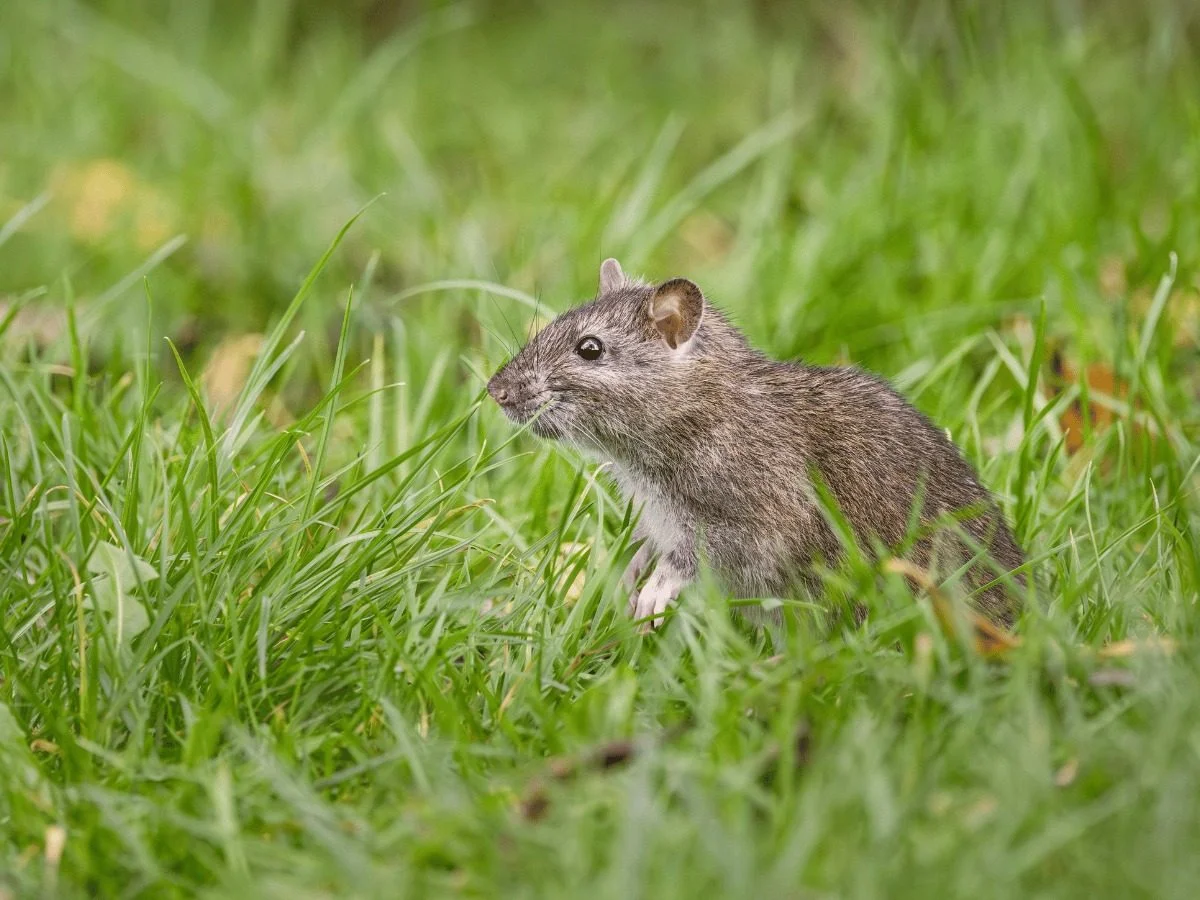
A cotton rat is a grassland animal. It lives in dense grass, weeds, and field margins, travels runways at ground level through vegetation, and it is not a climbing or attic animal. It is not a roof rat, and it does not belong in your attic.
Why it matters here: field edges, turnrows, ditches, and grassy margins are exactly its habitat, and when that cover is cut or worked it moves — to the nearest structure, at ground level.
So the work is low: thresholds and sweeps, garage door bottom corners, the slab edge, weep hole covers, penetrations, and outbuilding doors and wall bases. A company that hears "rat" and heads for the attic will spend your money in the wrong place.
And mowing genuinely works on this one. A clear strip around structures and fence lines is more effective against cotton rats than against mice, because cotton rats depend on cover to travel.
Cotton rats » · Identify Odessa rodents » · Rat vs mouse »
What else makes Stanton different
Grain, seed, and feed stored in volume on farm property, in bins, sacks, and outbuildings — a food supply that doesn't end when the field does. Feed and grain storage »
Equipment parked between seasons, which is prime nesting habitat and shows its damage the day you need the machine. Idle equipment »
A mix of farmhouses, in-town housing, and outbuildings — often older, often patched at least once. Older homes and failed patches »
Septic and often private wells on rural property, which affects what belongs on the ground.
The I-20 corridor through town, with the usual dumpster-and-food-waste Norway rat pressure where lodging, fuel, and restaurants concentrate. Commercial rodent control »
Martin County, not Ector or Midland. Different jurisdiction for code enforcement and a different appraisal district for property records. Landlord & tenant responsibility »
It's a drive, and it's past Midland. Roughly forty miles east. Call for details on scheduling and service area coverage.
We use products and placement methods that are safe for wells, septic systems, and livestock. Call for details on scheduling and service area coverage.
What we find most in Stanton
- House mice — the most common animal inside a farmhouse, a shop, and an outbuilding, and the first through any gap when a front hits. Droppings ⅛–¼ inch, rice-sized with pointed ends. House mice »
- Cotton rats — the field-country animal, moving in at ground level after harvest, mowing, or tillage. Cotton rats »
- Deer mice — likely in outbuildings, stored material, and equipment. Never dry-sweep droppings or nesting material. Deer mice » · Health risks »
- Norway rats — around grain and feed storage, trash, water, and the interstate corridor. Burrows 2–4 inches with a fan of excavated dirt. Norway rats »
- Pack rats — in sheds, stored equipment, and under vehicle hoods. Look for a midden of sticks, cactus, wire, and foil. Pack rats »
What we do on a Stanton job
- Inspection of the house, the outbuildings, the storage, and the equipment — plus where the structures sit relative to worked ground. Rodent inspection »
- Species ID — cotton rats, house mice, Norway rats, and pack rats are four different jobs at different elevations.
- Trapping on real runways, in outbuildings and along walls, placed where livestock, working dogs, and children can't reach them. Pet-safe »
- Exclusion in metal, weighted to ground level, on the house and the outbuildings — including the base of corrugated metal walls, where every rib leaves a gap.
- A storage and sanitation plan for seed, grain, and feed, and for spill around bins and loading areas.
- Timing advice tied to your operation, because doing this work before harvest instead of after is the single biggest difference in outcome and cost.
- Cleanup and decontamination — wetted, never dry-swept or shop-vacuumed. Droppings cleanup »
- Follow-up verification. We come back and confirm zero activity rather than reduced activity, and the points we sealed are re-checked at the same time.
We document chewed wiring and damaged equipment. We don't repair it — electrical, HVAC, mechanical, and roofing work goes to a licensed trade or a qualified technician.
Frequently asked questions
Why do we get mice every year right after harvest?
Because two pressures arrive together. Harvest removes cover from a large area in a short time and puts spilled seed and grain on the ground, so field populations move toward the nearest structure — and post-harvest shredding and tillage removes whatever cover was left. In roughly the same weeks, the first real cold fronts push rodents toward warmth, often within hours of the temperature dropping. Cover disappearing and cold arriving at once is why that stretch is the heaviest of the year, and why it repeats annually rather than randomly.
When should I do the sealing work on a farm?
During the growing season, while the crop is still standing — not in the fall once you're seeing activity. The work is identical either way, but doing it early means you're preventing entry instead of chasing animals that are already inside, and you're not trying to fit it around harvest. Practically: close the envelope and the outbuildings in metal in the summer, keep a clear mowed strip around structures and fence lines, get feed and seed into sealed metal containers, and fix drips. Then harvest arrives and your buildings simply hold.
Does irrigation make the rodent problem worse?
It builds the population that later shows up at your buildings. Water is usually the limiting resource in West Texas, so irrigated ground with a standing crop provides food, dense cover, and reliable water in one place and can support far more rodents than dry ground. Nothing appears at the house during the growing season — it's accumulating in the field. That's exactly why the quiet part of the year is the right time to seal, because you can see what's coming.
Is a cotton rat in my attic?
No. A cotton rat is a grassland rodent that lives in dense grass, weeds, and field margins and travels runways at ground level — it isn't a climbing or attic species and it isn't a roof rat, though it's misidentified as one constantly. In field country it enters structures at ground level once its cover is cut or worked, which means the work belongs at thresholds, garage door bottom corners, the slab edge, weep holes, penetrations, and outbuilding doors. Mowing a genuinely clear strip is also more effective against cotton rats than against mice, because they depend on cover to move.
What's the single most important housekeeping item on a farm?
Spilled seed and grain. A population passing through becomes a resident population when there's food on the ground, and bins, augers, trailers, and loading areas are where that food accumulates. Get everything storable into sealed metal or rigid containers rather than sacks, sweep up spill rather than leaving it, and keep stored material off the ground and off the walls. That plus a clear strip around structures removes most of what makes a farmstead attractive.
A field next to us just got worked and now we have rodents — what now?
That's a displacement event, and it's predictable. Activity typically spikes for a couple of weeks and then settles — but only if they can't get inside; if there's an opening, a temporary surge becomes a resident population. Check the outbuildings first because they take the traffic before the house does, set traps early and heavily rather than waiting for a second sighting, and recheck your envelope afterward for gnaw marks and fresh droppings. We have a full before, during, and after plan for exactly this on our Pleasant Farms page.
Do you come out to Stanton?
Call for details on scheduling and service area coverage. It's roughly forty miles east of Odessa on I-20, past Midland.
Wouldn't bait be easier on a farm?
It's a poor fit here, for three reasons. It doesn't close the openings, so a field cycle refills the buildings every year, and you're re-treating the same problem indefinitely. A poisoned rodent dies wherever it happens to be — inside a wall, inside a piece of equipment, or somewhere a working dog can reach it. And on a place with livestock, working dogs, wells, and septic, product and placement decisions deserve a specific answer rather than a default one. We use products and placement methods that are safe for wells, septic systems, and livestock.
Main pages Rodent control in Odessa, TX·Full service area·What it costs·Exclusion & proofing