
Sandy soil: how burrowing reads differently
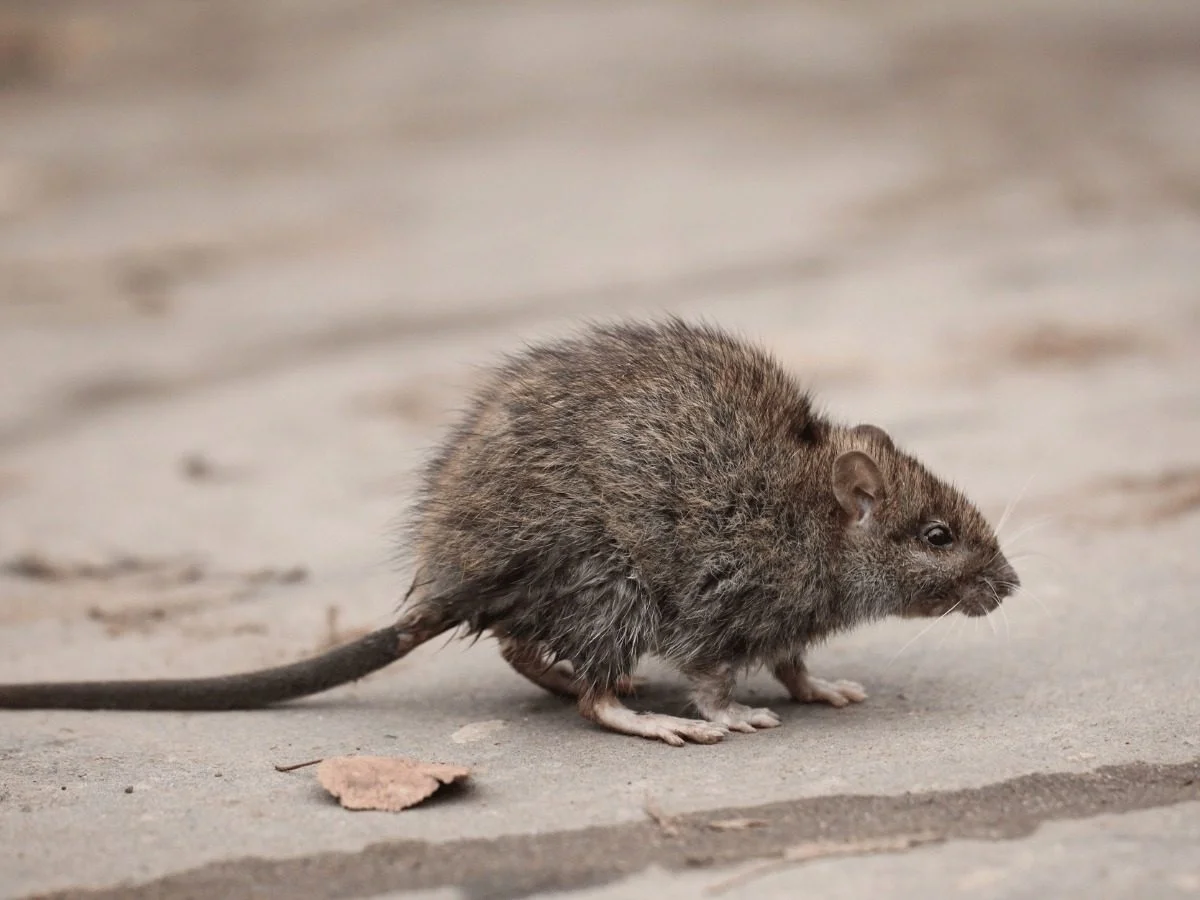
Norway rats burrow. In Odessa's caliche that's real work, so burrows tend to be deliberate, durable, and obvious. In loose sand it's easy, and that changes what you're looking at.
What to look for:
- Openings roughly 2–4 inches across at foundations, slab edges, fence lines, under sheds and steps, and in any vegetated patch — the same size as anywhere, because that's the animal, not the soil
- A fan of excavated material outside the opening, though in sand it spreads and flattens faster
- Openings that look partly collapsed. This is the important one. In loose sand a burrow slumps on its own, and a slumped hole is not evidence the burrow is abandoned — it's often just re-dug the next night
- Packed runways through sand and vegetation, hugging walls and fences. Runways show clearly in sand and are one of the better tells you'll get
- Tracks and tail drags after still nights and after rain. Sand takes a print in a way caliche doesn't, and that's a genuine advantage when you're figuring out where they travel
The practical method here: smooth an area and come back. Rake or smooth the sand around a suspect burrow or along a wall, note the date, and look again in a day or two. Fresh digging, fresh tracks, or a reopened hole means it's active. Nothing means it isn't. That test works better in sand than anywhere else we work.
And a caution about filling burrows: filling a burrow with sand accomplishes nothing on its own — it's the easiest material in the world to move. The fix is closing the structure, not the hole. Norway rats » · Droppings ID »
Blowing sand: why seals fail faster here
This is the part that explains the repeat problem.
What sand does to a building's rodent barriers:
- Abrades door sweeps, weatherstripping, and garage door bottom seals, so they harden, crack, and stop making contact years earlier than they otherwise would
- Packs into thresholds, door tracks, and garage door tracks, which holds a door off its seal — a compressed seal that can't seat is an open gap
- Fills and blocks weep holes and vent screens, which defeats drainage and ventilation and hides the opening at the same time
- Erodes and undermines at slab edges and along foundations, opening gaps where there weren't any
- Drifts against walls, fences, and equipment. A drift is a ramp — it can bridge over a threshold, a wall base, or a barrier that used to work
- Scours caulk and sealant, which West Texas UV has already been working on
What to do about it:
- Metal, not soft materials, wherever it can carry the load. Galvanized hardware cloth, sheet metal, and metal closure strips don't abrade away
- Check and replace sweeps and seals on a schedule rather than when you notice a problem. In this environment an annual look is maintenance, not paranoia
- Clear sand out of tracks and thresholds so doors actually seat
- Keep weep hole covers and vent screens clear, and use metal covers or stainless mesh — never plug weep holes solid, they're there to drain the wall
- Knock down drifts against buildings and fences before they get tall enough to bridge anything
- Look at your garage door with it closed and a light outside. Bottom corners first — that's the number one entry point in this whole region, and sand makes it worse
Full method » · Every entry point » · Rats & mice in the garage »
What else makes Monahans different
The I-20 corridor. Lodging, truck stops, restaurants, and fuel and freight operations concentrate along the interstate, and that means dumpsters, food waste, and 24-hour activity — the reliable Norway rat driver in any town. Commercial rodent control » · Restaurant rodent control »
Oilfield service activity, with yards, equipment storage, and shops providing cover and harborage on the edges of town.
Sand country habitat immediately around town, which supports pack rats, cotton rats where there's grass, and deer mice — the desert species mix rather than the suburban one.
Ward County, not Ector. Different jurisdiction for code enforcement and different appraisal district for property records, which comes up in neighbor and landlord questions. Landlord & tenant responsibility »
It's a drive. Roughly thirty-five miles southwest on I-20. Call for details on scheduling and service area coverage.
What we find most in Monahans
- House mice — the most common animal inside, and the first through any gap when a front hits. Droppings ⅛–¼ inch, rice-sized with pointed ends. House mice »
- Norway rats — around food waste, the interstate corridor, and water. Burrows 2–4 inches; droppings ½–¾ inch, thick with blunt ends. Norway rats »
- Pack rats — in sheds, stored equipment, and under vehicle hoods. Look for a midden of sticks, cactus, wire, and foil. Pack rats »
- Deer mice — genuinely likely in this landscape, especially in outbuildings and sheds. Never dry-sweep droppings or nesting material. Deer mice » · Health risks »
- Cotton rats — in grassy patches, moving into structures after mowing or clearing. Cotton rats »
- Roof rats — where there's mature landscaping and reachable rooflines, though less dominant here than in an irrigated neighborhood. Roof rats »
What we do on a Monahans job
- Inspection of the full envelope plus the ground — burrows, runways, drifts, and the condition of every seal and sweep on the building. Rodent inspection »
- Species ID — desert species, house mice, and Norway rats are different jobs at different elevations.
- Trapping on real runways and burrow approaches, out of reach of pets and children. Pet-safe »
- Exclusion in metal, weighted to ground level — garage door bottom corners, thresholds, slab edge, weep hole covers, penetrations, vents.
- A seal-maintenance recommendation, because in this environment that's the difference between sealed once and sealed for good.
- Cleanup and decontamination — wetted, never dry-swept or shop-vacuumed. Droppings cleanup »
- Follow-up verification. We come back and confirm zero activity rather than reduced activity, and the points we sealed are re-checked at the same time.
Frequently asked questions
Does sandy soil change how rats burrow?
It changes the evidence more than the animal. Norway rat burrows are roughly two to four inches across regardless of soil, but loose sand is far easier to dig, so burrows slump and collapse on their own — and a partly collapsed hole is not proof the burrow is abandoned, because it's often just re-dug that night. The advantage is that sand takes tracks, tail drags, and runways clearly, so smoothing an area and checking it a day or two later tells you very quickly whether it's active.
Why do my door seals keep failing out here?
Blowing sand abrades sweeps, weatherstripping, and garage door bottom seals so they harden and stop making contact, and it packs into thresholds and door tracks, which holds a door off its seal even when the seal itself looks fine. West Texas UV is working on the same materials at the same time. That's why metal closures last here and soft seals don't, and why checking sweeps and seals annually is ordinary maintenance rather than overkill in this environment.
Should I fill in rat burrows in my yard?
Filling a burrow in sand accomplishes very little on its own, because sand is the easiest material there is to move and the burrow is usually reopened immediately. It's also not the thing keeping rodents out of your house — the structure is. Trap the active population, close the building envelope in metal, and remove what's supporting them — food, feed, trash, and standing water — and the burrows stop being replaced.
Does sand blowing against my house actually let rodents in?
Yes, and it's underrated. A drift against a wall, a fence, or a piece of equipment works as a ramp, so it can bridge over a threshold, a wall base, or a barrier that was doing its job at ground level. Sand also fills weep holes and vent screens, which defeats drainage and hides the opening, and it erodes along slab edges and foundations to open gaps that weren't there before. Knocking drifts down before they build up is a genuinely useful habit here.
Do you drive out to Monahans?
Call for details on scheduling and service area coverage. It's roughly thirty-five miles southwest on I-20.
Is it different for a motel or a restaurant on the interstate?
The drivers are, yes. Along an interstate corridor the pressure is dumpsters, food waste, grease, and around-the-clock activity, which supports Norway rats specifically — ground-level, burrowing animals — so the work concentrates on door bottoms and corners, thresholds, floor drains, foundations, and the dumpster area rather than the roof. Sanitation and pickup frequency at the enclosure usually move the needle more than anything done indoors.
Are the rodents out here different from Odessa's?
The mix leans more desert than suburban. House mice and Norway rats are common in both places, but pack rats, deer mice, and cotton rats show up more readily in sand country and around outbuildings than they do in central Odessa, while roof rats are less dominant here than in a mature irrigated neighborhood. That matters because species decides trap placement and elevation, and getting it wrong is the usual reason a DIY attempt catches nothing.
Main pages Rodent control in Odessa, TX·Full service area·What it costs·Exclusion & proofing